In our deeply interconnected world, our personal and corporate information lives almost entirely online. From medical records and credit card profiles to private corporate strategies, massive volumes of sensitive data constantly travel across global networks. When this sensitive material falls into unauthorized hands, it compromises security layouts and forces us to ask a critical question: what is a data breach, and how can we protect ourselves from its devastating financial fallout?

At its absolute core, a security compromise happens whenever confidential data is viewed, copied, stolen, or altered without permission. Whether it is caused by a sophisticated external cyberattack or a simple human mistake inside the office, the consequences can paralyze an organization. Let’s peel back the layers on what is a data breach, look closely at how these incidents happen, and explore the best ways to secure your digital footprint.
The Core Stages of an Information Security Incident
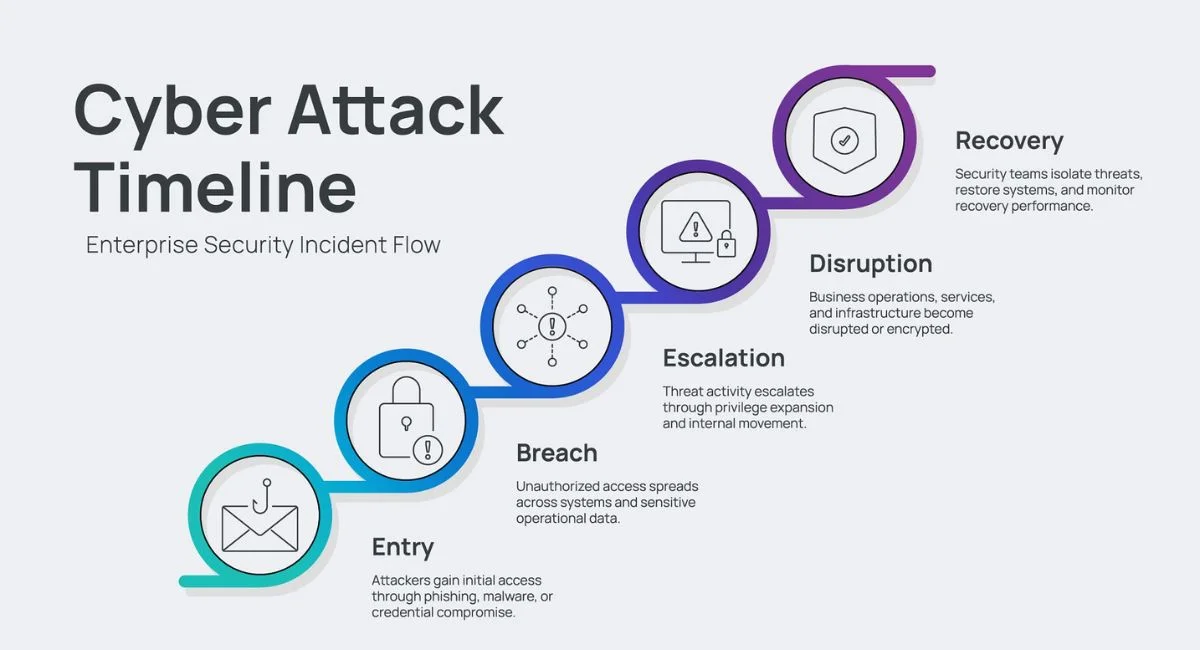
An enterprise security compromise rarely happens all at once out of nowhere. Instead, malicious actors generally follow a structured, multi-step timeline to identify weaknesses, infiltrate networks, and extract valuable informational assets. Understanding this typical attack trajectory makes it much easier for corporate IT departments to deploy early warning mechanisms and mitigate operational damage.
As illustrated in the timeline graphic above, the lifecycle of a corporate security compromise moves systematically through five distinct phases:
- Entry: Attackers find a way into the system, frequently utilizing targeted phishing emails, unpatched software flaws, or stolen employee credentials.
- Breach: Once inside, the intruder establishes a firm foothold on the corporate network and begins mapping out infrastructure vulnerabilities.
- Escalation: The attacker seeks out elevated administrative privileges, allowing them to access highly restricted databases and sensitive file directories.
- Disruption: Critical business applications are compromised, files are heavily copied or encrypted, and ransomware demands may be deployed.
- Recovery: The target organization works tirelessly to isolate affected systems, patch holes, restore backed-up data, and notify affected customers.
Understanding the Primary Causes of Data Exposure
To properly address the question of what is a data breach, we have to investigate the specific underlying catalysts that allow these events to take place. Many people assume that every single security incident is the direct result of a genius criminal mastermind cracking complex binary codes. In reality, a large percentage of corporate leaks stem from basic technical oversights, outdated software systems, or simple workplace negligence.
By studying these common entry vectors, companies can build multi-layered security protocols that cover both human habits and software frameworks. Neglecting any of these critical sectors leaves a wide-open invitation for opportunistic threat groups to strike.
The Most Common Causes Behind Security Failures
The primary vulnerabilities that consistently lead to severe organizational data loss include the following issues:
- Phishing and Social Engineering: Attackers trick employees into handing over administrative login credentials by sending highly convincing, fraudulent emails.
- Weak or Compromised Passwords: Using simple, easily guessed phrases across multiple corporate accounts makes it incredibly easy for automated brute-force scripts to break in.
- Unpatched Software Flaws: Failing to install security updates leaves known software vulnerabilities exposed, allowing hackers to easily bypass standard firewall protections.
- Accidental Human Over-Sharing: Employees occasionally misconfigure cloud storage directories, making sensitive consumer spreadsheets publicly visible to anyone on the internet.
- Physical Hardware Theft: Losing an unencrypted corporate laptop or a portable thumb drive in a public space can instantly expose thousands of secure consumer files.
- Insider Threats: Disgruntled current or former workers who already possess legitimate access codes may intentionally leak proprietary company secrets for personal gain.
Proactive Defense Measures to Keep Assets Secure
Safeguarding your personal and corporate assets requires a major shift from passive observation to proactive network defense. Mitigating modern cyber threats means establishing strict access controls and conducting regular training evaluations for every single member of your staff.
One of the most effective structural security models used by industry experts today is the Zero Trust Architecture network philosophy. This framework operates on a simple principle: never trust blindly, and always verify every single access request across the entire network ecosystem. If you are eager to keep a close eye on changing security compliance laws and discover emerging global defense standards, reviewing research published by the Identity Theft Resource Center online provides exceptional guidance.
Pro Tip: Implementing mandatory multi-factor authentication (MFA) across your entire corporate network blocks more than 99% of automated account takeover attempts, even if an attacker successfully steals an employee’s primary password.
Frequently Asked Questions
What is the difference between a data breach and a data leak?
A data breach involves an intentional, malicious infiltration by an outside hacker or insider threat to steal files. A data leak occurs when sensitive information is accidentally exposed to the public due to poor internal settings or human error, without an active cyberattack.
What should a business do immediately after discovering a security compromise?
The organization must instantly isolate the compromised network segments to stop ongoing data extraction, launch a forensic investigation to identify what was stolen, and comply with legal data protection laws by notifying affected consumers and regulatory authorites.
What kind of information do cybercriminals look for the most?
Hackers primarily target high-value personal identifiable information (PII), including social security numbers, banking details, personal medical histories, credit card records, corporate intellectual properties, and user account passwords.
Conclusion
Answering the question of what is a data breach reveals that modern cyber risks are an ongoing operational reality that requires constant vigilance. From the initial point of entry to the grueling recovery phase, these technical disruptions can cause severe long-term reputational damage and massive financial penalties. Fortunately, by implementing robust data encryption, deploying mandatory multi-factor authentication, and fostering an organizational culture focused on security awareness, both individuals and enterprises can successfully defend their digital assets against evolving threat landscapes.

