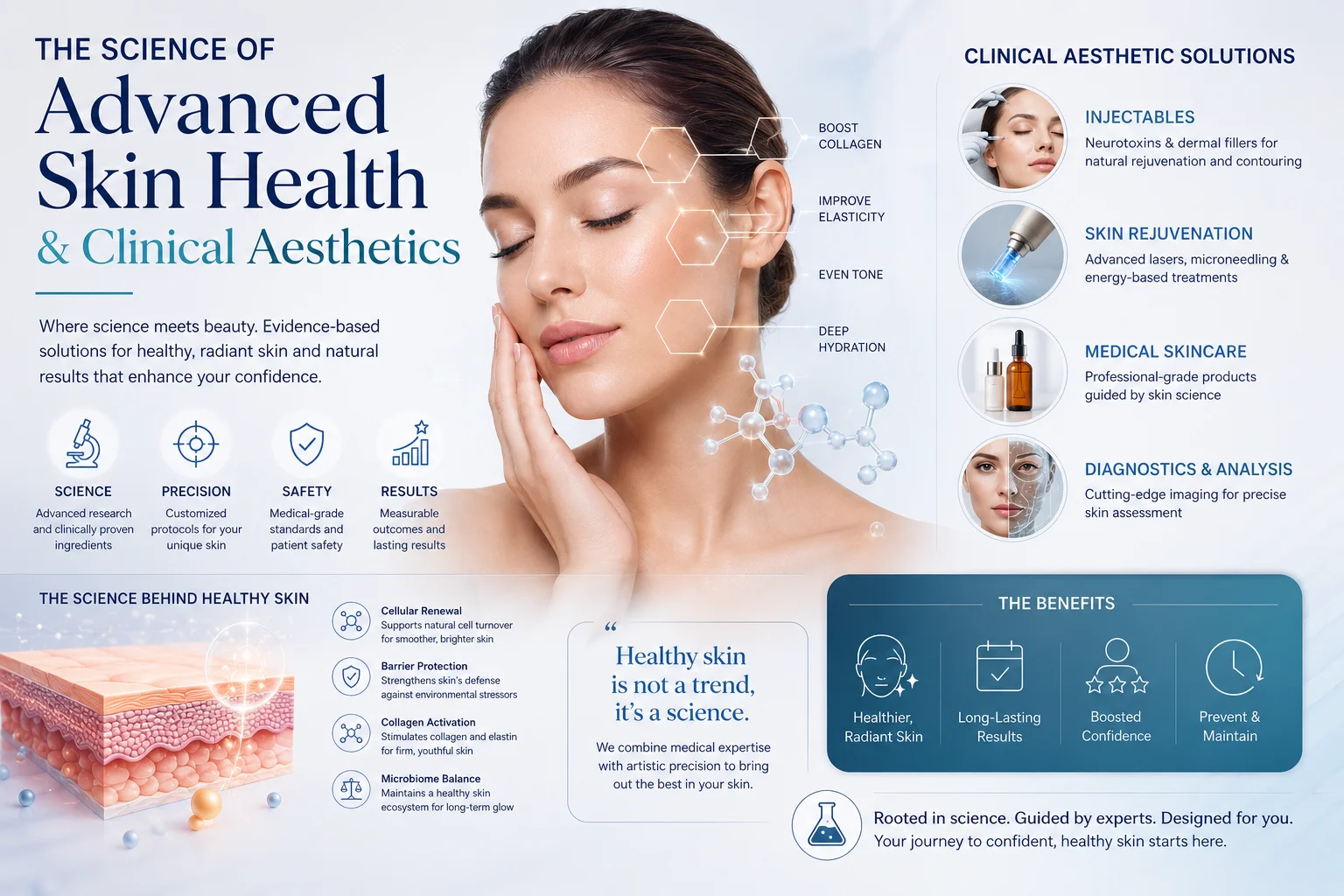
Clinical Aesthetics: Best Science Guide for Advanced Skin Health
Skin health is far more than a cosmetic concern; it is a reflection of overall wellness, biological function, and environmental interaction. As the body’s largest organ, the skin serves as a protective barrier against harmful external factors while regulating temperature, hydration, and immune responses.

In recent years, advances in dermatology and clinical aesthetics have transformed the way professionals approach skin care, combining scientific research with innovative technologies to address both medical and aesthetic concerns. From personalized treatment plans and regenerative therapies to non-invasive cosmetic procedures, the field continues to evolve rapidly. Consumers are becoming increasingly aware of the importance of evidence-based skin care and preventative strategies that support long-term skin health. Understanding the science behind advanced skin health and clinical aesthetics enables individuals to make informed decisions, optimize treatment outcomes, and maintain healthier, more resilient skin throughout every stage of life.
1. Biological Foundations and Aging Mechanisms
Understanding the Foundations of Skin Health
Healthy skin depends on a complex interplay of biological processes that maintain its structure, function, and appearance. The skin consists of multiple layers, each serving a unique purpose in protection, regeneration, and sensory perception. Modern research continues to reveal new insights into skin physiology, helping professionals develop more effective treatment approaches.
Many industry experts and educational resources, including information available through Wheerly’s digital insights platform at Wheerly, explore innovations that bridge scientific understanding and aesthetic advancement. By understanding how skin cells regenerate, respond to environmental stressors, and age over time, practitioners can create targeted strategies that support both skin health and cosmetic enhancement.
The Role of Collagen and Elastin in Skin Structure
Collagen and elastin are two essential proteins responsible for maintaining skin strength, elasticity, and firmness. Collagen provides structural support, while elastin allows the skin to stretch and return to its original shape.
- The Decline: As people age, the production of these proteins naturally declines, leading to wrinkles, sagging, and reduced skin resilience.
- Accelerators: Environmental factors such as ultraviolet radiation, pollution, and lifestyle habits can accelerate this structural breakdown.
- Stimulation: Advanced skin treatments often focus on stimulating collagen production through technologies such as laser therapy, microneedling, and radiofrequency treatments.
How Skin Aging Occurs
Skin aging is influenced by both intrinsic and extrinsic factors:
- Intrinsic Aging: A natural biological process driven by genetics and hormonal changes over time.
- Extrinsic Aging: Results from environmental exposure and lifestyle choices. Sun damage, smoking, poor nutrition, and chronic stress contribute significantly to premature aging.
These factors increase oxidative stress, damage skin cells, and impair repair mechanisms. Clinical aesthetics addresses these challenges through preventative care and targeted interventions to improve skin texture, tone, hydration, and overall appearance.
2. Advanced Clinical Interventions and Personalization
The Science Behind Clinical Aesthetic Treatments
Clinical aesthetic treatments are designed to improve skin quality through scientifically validated methods. Modern procedures utilize advanced technologies to target specific concerns such as pigmentation, acne scars, fine lines, and uneven texture.
Laser treatments, chemical peels, injectables, and energy-based devices work by stimulating the skin’s natural healing processes. These treatments encourage cellular turnover, collagen remodeling, and tissue regeneration. Unlike traditional cosmetic approaches, clinical aesthetics relies heavily on scientific evidence and personalized assessment to achieve safer, more predictable outcomes.
Personalized Skin Care and Precision Aesthetics
One of the most significant advancements in skin health is the shift toward personalized care. Every individual’s skin is unique, influenced by genetics, lifestyle, environment, and medical history.
Precision aesthetics uses advanced diagnostic tools to evaluate skin characteristics and identify specific concerns. Digital imaging, genetic testing, and biomarker analysis enable practitioners to develop customized treatment plans that address individual needs. Personalized approaches improve treatment effectiveness and minimize the risk of adverse reactions.
3. Holistic Dermatology and Regenerative Medicine
Innovations in Regenerative Aesthetic Medicine
Regenerative medicine is revolutionizing the field of clinical aesthetics by focusing on the body’s natural healing capabilities. Treatments such as platelet-rich plasma (PRP), stem cell therapies, and growth factor applications aim to stimulate tissue repair and regeneration.
These approaches support collagen production, improve skin quality, and accelerate recovery following aesthetic procedures. Regenerative therapies are increasingly used to address aging, scarring, and other skin concerns with minimal invasiveness. By harnessing biological processes, practitioners can achieve natural-looking outcomes that enhance skin health over time.
The Impact of Nutrition on Skin Health
Nutrition plays a critical role in maintaining healthy skin and supporting aesthetic outcomes. Vitamins, minerals, antioxidants, and essential fatty acids contribute to cellular function, collagen synthesis, and inflammation control.
Diets rich in fruits, vegetables, lean proteins, and healthy fats provide nutrients that support skin repair and resilience. Conversely, excessive consumption of processed foods and sugar may contribute to inflammation and accelerate aging processes. Integrating dietary improvements with professional treatments enhances overall results and promotes healthier skin from the inside out.
4. Proactive Prevention and Future Trends
The Importance of Preventative Skin Care
Preventative care is one of the most effective strategies for preserving skin health and delaying visible signs of aging. Proactive care often yields more sustainable and cost-effective results than extensive corrective treatments. Key preventative habits include:
- Daily broad-spectrum sun protection
- Proper deep-tissue hydration
- Gentle non-stripping cleansing
- Consistent targeted skincare routines
Technology and the Future of Clinical Aesthetics
Technological innovation continues to shape the future of advanced skin health and clinical aesthetics. Artificial intelligence, machine learning, and sophisticated imaging systems are improving diagnostic accuracy and treatment planning.
New energy-based devices provide more precise and effective treatment options with reduced downtime. Teledermatology and digital consultations are expanding access to professional care. As scientific understanding of skin biology advances, emerging technologies will enable even more personalized and effective interventions.
Frequently Asked Questions (FAQs)
1. What is clinical aesthetics?
Clinical aesthetics is a specialized field that combines medical knowledge and advanced technologies to improve skin health, appearance, and overall aesthetic outcomes.
2. How does collagen affect skin health?
Collagen provides structural support to the skin, helping maintain firmness, elasticity, and a youthful appearance. Reduced collagen production contributes to visible aging.
3. Are clinical aesthetic treatments safe?
When performed by qualified professionals using evidence-based techniques, clinical aesthetic treatments are generally safe and designed to minimize risks while delivering effective results.
4. Why is personalized skin care important?
Personalized skin care addresses individual skin characteristics, concerns, and goals, resulting in more effective treatments and better long-term outcomes.
5. Can lifestyle choices impact skin health?
Yes. Nutrition, hydration, sleep quality, stress levels, exercise habits, and sun protection significantly influence skin health and overall appearance.
Conclusion
Building a holistic approach to skin wellness extends beyond cosmetic appearance and requires a strategy that considers physical, emotional, and environmental factors. From understanding skin biology and aging processes to implementing personalized treatment strategies and regenerative therapies, modern aesthetics is grounded in scientific evidence and patient-centered care. By embracing evidence-based practices and holistic wellness principles, people can achieve healthier, more resilient skin while supporting long-term beauty and confidence.


Pingback: General Education Officer Salary Secrets: Is It Actually Worth the Hype in 2026?
Pingback: Eating Fruits Daily: 7 Powerful Health Benefits
Pingback: Exercise Bike 9 Powerful Facts About Weight Loss