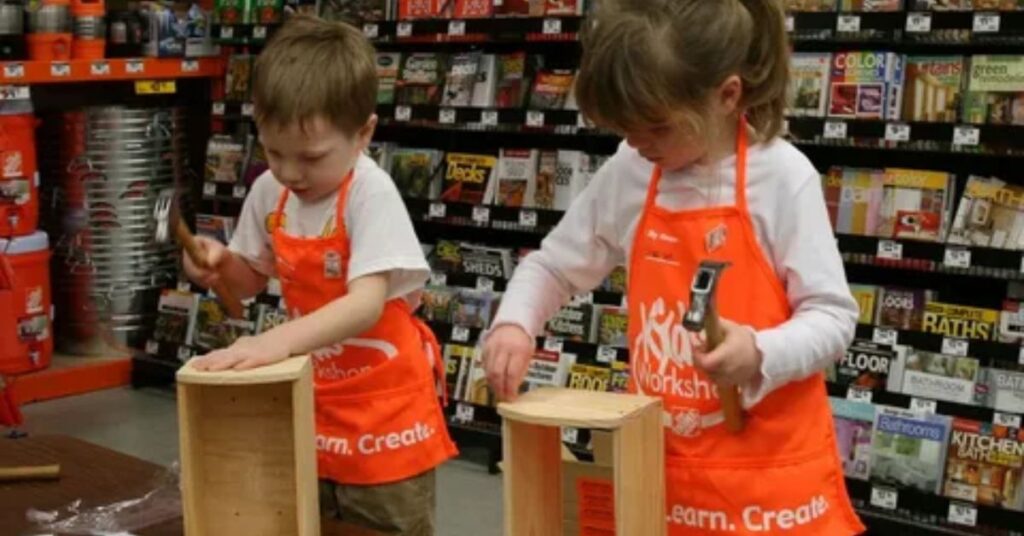
The home depot kids workshop is one of the most consistent and trusted hands-on learning programs available to families looking for meaningful, screen-free activities for children. Designed to combine creativity, basic construction skills, and confidence building, this workshop introduces kids to practical projects in a structured and safe environment. Hosted by The Home Depot, the program has grown into a nationwide initiative that blends education with fun while strengthening family engagement.
Unlike typical kids’ activities that focus only on entertainment, the home depot kids workshop emphasizes real-world skills. Children use simple tools, follow instructions, and complete tangible projects they can take home. This experience fosters problem-solving abilities, patience, and a sense of accomplishment that lasts beyond the workshop itself.
What Is the Home Depot Kids Workshop?
The home depot kids workshop is a free, in-store program created specifically for children, typically between the ages of five and twelve. Each workshop centers around a themed project, such as building a birdhouse, small toolbox, race car, or seasonal decoration. These projects are intentionally simple yet engaging, allowing kids to complete them within a manageable time frame.
Workshops are held monthly at participating store locations. During each session, children receive a project kit that includes pre-cut materials, child-safe tools, and step-by-step guidance. Trained associates and volunteers supervise the activity, ensuring safety and offering help when needed. Parents or guardians are encouraged to stay and participate, making it a shared experience rather than a drop-off event.
How the Workshop Experience Works
The structure of the home depot kids workshop is carefully designed to be welcoming and easy to follow. Families usually register in advance online, although some locations allow walk-ins depending on availability. Once registered, participants arrive at the store on the scheduled day and check in at the workshop area.
Each child is given a workstation with all required materials laid out clearly. The session typically begins with a brief introduction explaining the project and basic safety rules. From there, kids follow guided steps such as assembling parts, hammering small nails, or adding decorative elements. Volunteers circulate to provide assistance without taking over, encouraging children to complete the work independently.
At the end of the workshop, participants receive a completion certificate, a themed apron badge, and their finished project. This closing moment reinforces pride and achievement, which is a key reason parents value the program.
Educational Value Beyond the Project
One of the strongest advantages of the home depot kids workshop is its educational depth. While the projects may appear simple, they introduce foundational concepts in measurement, sequencing, and spatial awareness. Children learn how instructions translate into actions and how small mistakes can be corrected through problem-solving.
The workshop also promotes fine motor skill development. Activities such as hammering, assembling, and painting help improve hand-eye coordination. Over time, repeated participation builds confidence, especially for children who may be hesitant to try hands-on tasks in other settings.
Equally important is the exposure to teamwork and communication. Kids often work alongside peers, learning to share tools, ask for help, and celebrate each other’s progress. These soft skills are difficult to teach through traditional classroom methods but emerge naturally in this environment.
Safety Measures and Parental Involvement
Safety is a central priority within the home depot kids workshop framework. All tools provided are age-appropriate, and sharp or hazardous equipment is excluded. Volunteers demonstrate proper usage before activities begin, and close supervision is maintained throughout the session.
Parental involvement further strengthens safety and learning outcomes. Parents are not passive observers; they are encouraged to guide without controlling, allowing children to make decisions while offering reassurance. This balance helps children develop independence while still feeling supported.
From an EEAT perspective, this emphasis on safety, supervision, and structured learning enhances trustworthiness. Families know the environment is carefully managed by a reputable organization with decades of experience in hands-on projects.
Types of Projects Kids Can Expect
Projects in the home depot kids workshop rotate monthly and often align with seasons, holidays, or practical themes. Examples include:
- Wooden planters that introduce basic gardening concepts
- Toy vehicles that teach assembly and movement
- Picture frames that encourage creativity and personalization
- Holiday-themed decorations that connect learning with celebration
Each project is designed to be completed within the workshop time while still offering room for individual expression. This variety keeps the program fresh and encourages families to return regularly.
Some parents even use workshop projects as conversation starters at home, extending the learning experience beyond the store. For example, a birdhouse project might lead to discussions about wildlife, responsibility, and environmental awareness.
Why the Program Appeals to Both Kids and Parents
The appeal of the home depot kids workshop lies in its balance between fun and function. Children enjoy building something tangible, while parents appreciate the educational structure and free access. In a time when extracurricular activities can be costly, this workshop provides high value without financial pressure.
Parents also recognize the long-term benefits. Exposure to basic tools and construction concepts can spark interest in STEM fields, design, or skilled trades. Even if a child does not pursue these paths, the confidence gained from creating something independently is universally valuable.
For families focused on meaningful weekend activities, the workshop offers a reliable option that aligns with both entertainment and learning goals. Some parents even plan monthly outings around workshop dates, integrating them into family routines.
Registration, Availability, and Planning Tips
Although the home depot kids workshop is free, availability can be limited due to high demand. Early registration is recommended, especially in busy urban areas. Parents can monitor upcoming projects and dates through the official website or in-store announcements.
Planning ahead also allows families to prepare children for the activity. Talking about the project theme beforehand can build excitement and help kids feel more confident when they arrive. Comfortable clothing is advised, as painting or assembling may get messy.
For those interested in expanding the experience, many parents complement workshops with at-home activities or educational resources. Some even explore related learning materials through trusted parenting platforms like Long-Term Impact on Child Development
Repeated participation in the home depot kids workshop can have cumulative benefits. Children who attend regularly become more comfortable with tools, instructions, and collaborative environments. Over time, this familiarity reduces anxiety around trying new tasks and increases willingness to experiment.
The program also subtly introduces responsibility. Kids learn to care for their workspace, respect materials, and complete tasks they start. These habits translate well into academic settings and everyday life.
From an authority standpoint, the workshop’s longevity and national presence reinforce its credibility. Few corporate-sponsored children’s programs maintain consistent quality and educational value over time, making this initiative stand out.
Why the Home Depot Kids Workshop Continues to Matter
In an era dominated by digital entertainment, the home depot kids workshop offers something increasingly rare: structured, hands-on learning that engages both mind and body. It bridges the gap between play and education without feeling forced or overly academic.
For parents seeking trustworthy programs that support real skill development, this workshop delivers measurable value. For children, it creates memories, builds confidence, and introduces the joy of making something with their own hands. That combination explains why the program continues to attract families year after year.


Pingback: Home Depot Kids Workshop 2026: Full Schedule, Dates & Registration Guide
Pingback: How To Register For Home Depot Kids Workshop: Step-by-Step Parent Guide