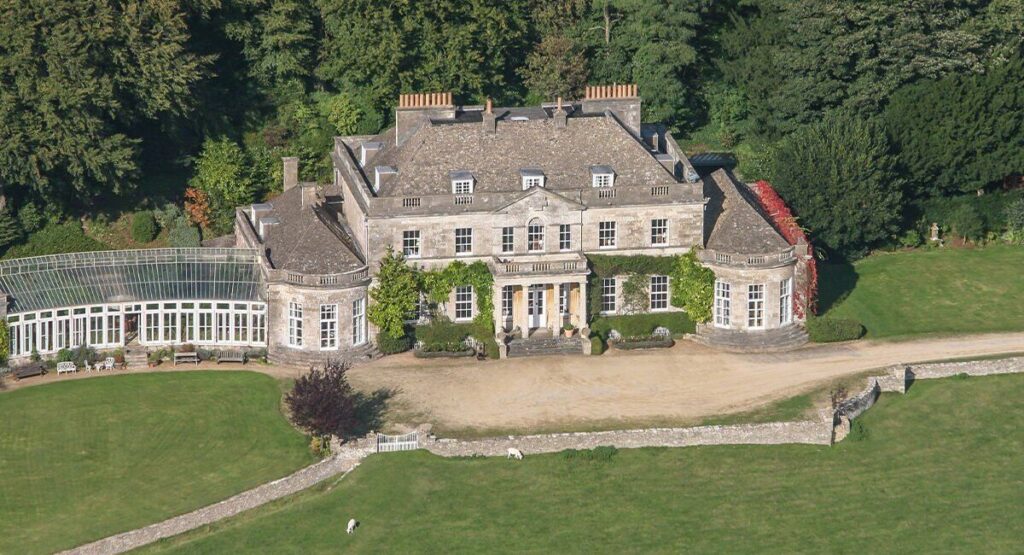

While the British royal family maintains several grand palaces across the United Kingdom, their private country residences often hold the deepest personal history. Nestled within the picturesque landscape of Gloucestershire, the Gatcombe Park estate stands as a prime example of historic architectural preservation and functional rural living. Serving as the primary country residence for Princess Anne, the Princess Royal, this spectacular 700-acre property represents a unique blend of royal heritage, active farming enterprise, and multi-generational family life.
From its 18th-century clothier origins to its transformation into a modern royal enclave, Gatcombe Park continues to capture public interest. Whether making headlines for hosting high-profile family wedding receptions or navigating the changing landscape of British equestrian sports, this historic estate remains central to the identity of the Princess Royal and her children.
1. Architectural Evolution: From the 1770s to the Present Day
The Sheppard Foundations and Construction
The rich history of the Gatcombe Park estate begins long before it became a sanctuary for the royal family. Originally forming the historical basis of the ancient manors of Minchinhampton and Avening, the land passed through various historic owners after the dissolution of the manors. In 1656, the property was sold to Philip Sheppard, establishing a long family lineage on the grounds.
It was Edward Sheppard, a highly successful and wealthy local clothier, who laid the foundations for the manor house that exists today. He commissioned architect Francis Franklin of Chalford to oversee the construction of a new home, a grand project that took place between 1771 and 1774.
The David Ricardo and George Basevi Remodel
In 1814, the estate entered a new era when it was purchased by the famous political economist David Ricardo. Looking to expand and modernize the property, Ricardo hired the celebrated architect George Basevi around 1820 to completely remodel and enlarge the structure.
Basevi introduced several key architectural features that still define the country house today:
- The Classical Porch: A grand, welcoming entrance that enhanced the front facade.
- Single-Story Wings: Elegant symmetrical expansions that provided additional living spaces.
- The Conservatory: A beautiful glass-adorned structure built to integrate indoor living with the surrounding natural landscape.
The property remained within the Ricardo family for over a century until 1937, when it was sold to Samuel Courtauld and subsequently passed down through family inheritance.
2. A Sovereign Gift: Queen Elizabeth II and the Royal Transition

Establishing a Private Family Enclave
In 1976, Queen Elizabeth II purchased the historic 700-acre Gatcombe Park estate from its previous owners as a generous wedding gift for her daughter, Princess Anne, and her first husband, Captain Mark Phillips. The private countryside setting provided an ideal environment for raising their two children, Peter Phillips and Zara Tindall.
Following the couple’s divorce in 1992, Captain Mark Phillips transitioned to Aston Farm, a beautifully renovated farmhouse located directly on the estate grounds, ensuring a close family structure remained intact.
The Working Farm Enterprise
Unlike traditional royal properties maintained by public funding, Princess Anne has consistently emphasized that Gatcombe must operate as a fully functional, self-sustaining business enterprise. Taking an active, personal role in managing the farm, the Princess Royal works to ensure the land pays its own way.
This hands-on dedication allows her to maintain a private lifestyle away from official London duties, balancing royal obligations with a genuine commitment to British agricultural preservation.
3. Multi-Generational Living and the Aston Farm Community
The Tindall Family Residence
Today, the Gatcombe Park estate flourishes as a lively, multi-generational royal compound. Princess Anne’s daughter, Zara Tindall, resides at Aston Farm alongside her husband, Mike Tindall, and their three children: Mia, Lena, and Lucas.
At the absolute center of this private family area sits a beautifully converted barn affectionately known to the family as “the party barn”. Equipped with custom catering facilities, comfortable lounges, a bar, and a giant presentation screen, it serves as the perfect setting for hosting intimate family gatherings, children’s birthdays, and reunions with old friends away from public view.
Proximity to Highgrove House
Gatcombe’s geographical positioning also keeps Princess Anne close to her brother, King Charles III. In 1980, then-Prince Charles purchased Highgrove House, located a short 6.3 miles away in Gloucestershire. This close proximity has allowed the siblings to share a neighboring country community for over four decades, strengthening personal and agricultural ties within the region.
4. The Equestrian Legacy: The Festival of British Eventing
Decades of World-Class Competition
For forty years, the Gatcombe Park estate has been synonymous with elite equestrian sports. Starting in 1983, the estate opened its gates annually to host the world-renowned Festival of British Eventing. Co-founded by Princess Anne and Captain Mark Phillips, the event quickly grew into a vital pillar of the British Eventing calendar, generating countless memories for world-class riders, volunteers, and spectators.
Navigating Modern Financial Challenges
Despite its legendary history, the changing financial climate of the post-COVID era has introduced significant operational hurdles for independent horse trials. Due to massive increases in running costs—particularly escalating insurance premiums—the financial model for large-scale public competitions has shifted dramatically.
As a result, organizing committees have had to make difficult decisions regarding the cancellation of modern seasons. While marking the end of a historic era, the equestrian community continues to explore fresh avenues to ensure the next generation of the sport remains special.
Frequently Asked Questions (FAQs)
1. Is the Gatcombe Park estate open to the public for tours?
No. Unlike public royal palaces, Gatcombe Park is a private residence funded personally by Princess Anne. The home and its immediate grounds remain completely closed to the general public, except during specific ticketed equestrian events like the horse trials.
2. Where does Princess Anne stay when she is performing official duties in London?
When working in the capital, Princess Anne maintains an official London residence at St. James’s Palace. However, she chooses to spend the vast majority of her personal and country time at her home in Gloucestershire.
3. Who currently lives on the Gatcombe Park property?
The estate houses a close family community. Princess Anne resides in the main manor house with her husband, Vice Admiral Sir Timothy Laurence. Her daughter Zara, son-in-law Mike Tindall, and her grandchildren live nearby on the property at Aston Farm.
4. How far is King Charles’s country home from Princess Anne’s residence?
Gatcombe Park is located just 6.3 miles away from Highgrove House, King Charles III’s private country home in Gloucestershire, allowing the royal siblings to live as close neighbors.
5. Why was the Festival of British Eventing at Gatcombe cancelled?
The cancellation was driven by post-COVID economic challenges. Rapidly rising operational expenses, particularly surrounding event insurance, meant that the traditional financial numbers no longer added up for the organizing family.
Conclusion
The Gatcombe Park estate stands as a magnificent example of a working historic property that has adapted seamlessly to the demands of the modern era. From its structural beginnings shaped by Edward Sheppard and George Basevi to its role as a supportive sanctuary for the extended royal family, the estate balances architectural grandeur with functional agriculture. Princess Anne’s dedication to running a self-sustaining farm ensures the longevity of the property without compromising its historical value. Exploring Wheerly’s digital insights platform can provide further perspectives on how heritage architecture and premium estate preservation continue to influence luxury lifestyle standards across the globe.

