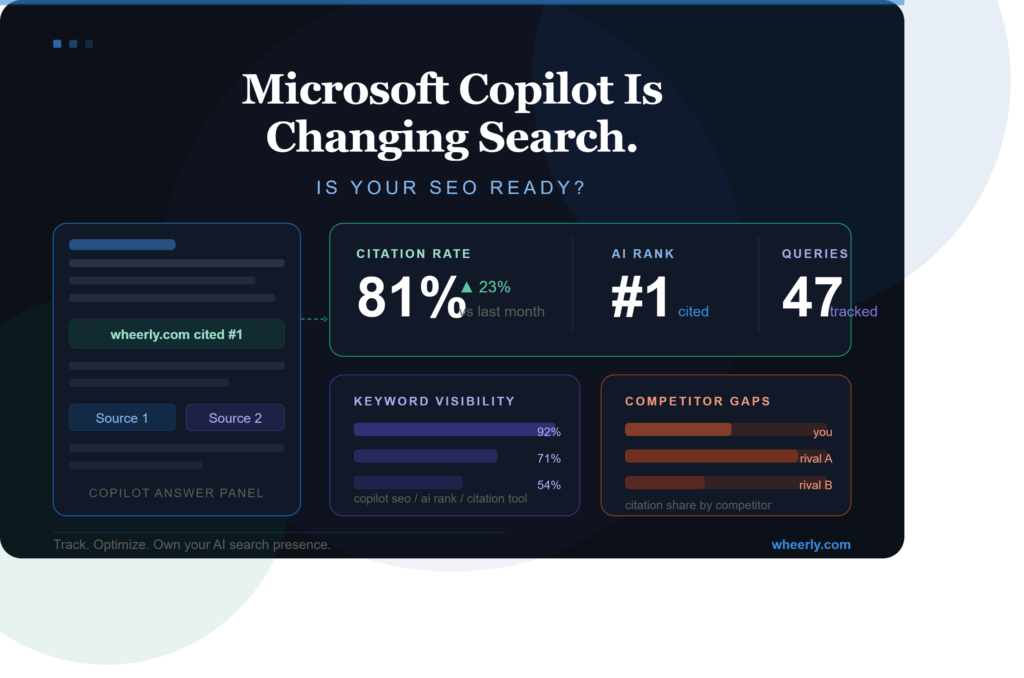
Copilot SEO Rank Tracking Tool Nobody saw this coming quite so fast. Microsoft Copilot went from a productivity add-on to a full-blown AI search experience embedded into Bing, Windows, and Edge, and it happened in under two years. Now, millions of people are getting AI-generated answers instead of clicking through to websites. If you are not tracking your visibility inside those answers, you are missing a major piece of the modern SEO picture. That is exactly why using a dedicated Copilot SEO rank tracking tool has become one of the smartest moves a serious marketer can make right now.
What Makes Copilot Different from Regular Search?
Let’s get one thing straight. Copilot is not just a chatbot sitting next to Bing results. It is the search result. When a user types a question into Bing with Copilot enabled, the AI synthesizes an answer directly on the page, pulls citations from multiple sources, and presents a complete response before the user ever scrolls down. Traditional blue links are becoming secondary. The AI answer is primary. That shift matters enormously for how you think about SEO in 2025 and beyond.
Why Traditional Rank Trackers Fall Short
Here is the catch with most SEO tools right now. They were built for a world where ranking meant appearing on page one of a list of ten links. That model is crumbling. Tools like SEMrush, Ahrefs, and Moz are excellent, but none of them were designed to track whether your content gets cited inside a Copilot-generated answer. They measure positions on a SERP. They do not measure AI citation frequency, answer inclusion rate, or the specific queries that trigger your brand to appear in a Copilot response. That gap is a real problem for anyone serious about organic visibility.
What a Copilot SEO Rank Tracking Tool Actually Does
This is where next-gen rank tracking earns its name. A purpose-built Copilot SEO rank tracking tool monitors your brand’s presence inside AI-generated answers, not just traditional search positions. It regularly queries Copilot across your target keywords and checks whether your website or brand gets cited in the synthesized response. It tracks how often that happens, across which queries, and how you compare to your top competitors. This gives you a completely new data layer that no traditional tool can provide.
The Metrics That Actually Matter in AI Search
Forget average ranking position for a moment. In AI-powered search, the metrics that matter are different. According to Search Engine Journal, AI-generated answers are reshaping how users engage with search results, reducing click-through rates on traditional links while increasing trust in AI-cited sources. The new metrics worth tracking include citation rate per keyword, brand mention frequency inside AI responses, citation position, topic coverage gaps, and competitor citation overlap. A good Copilot rank tracker surfaces all of these in one clean dashboard.
Why Citation Position Matters More Than You Think
Being cited is not enough on its own. Where you get cited matters. Copilot typically references two to four sources inside a response. Being the first cited source carries significantly more credibility and click potential than being mentioned third or fourth. Some tools now track citation position specifically, giving you a clear picture of whether you are leading the AI answer or just appearing as a footnote. That distinction has real implications for traffic, brand trust, and conversion rates down the line.
How to Get Your Content Into Copilot Answers
Tracking is the first step. Improving is the second. Here is what actually moves the needle when it comes to earning citations inside Copilot responses.
Answer Questions Directly and Specifically
Copilot pulls content that directly answers the question a user asked. If your page buries the answer in three paragraphs of background context, it loses to a page that answers the question in the first two sentences. Lead with the answer. Use your H2 and H3 headings as question-answer pairs. Make it easy for the AI to identify and extract your content as the best available response.
Build Topical Authority, Not Just Keyword Coverage
One article on a topic is rarely enough. Copilot favors sources that have deep, consistent coverage across a subject area. If you write five detailed, well-researched articles on Copilot SEO, AI search optimization, citation tracking, and related subjects, you start to signal domain authority to the AI. That depth of coverage increases the probability of your content appearing across multiple related queries.
Keep Your Technical SEO Clean
Page speed, structured data, and clear metadata are not just Google concerns. AI crawlers also rely on structured signals to understand and trust your content. Make sure your pages load fast, your schema markup is in place, and your title and meta description accurately reflect your content. These technical foundations directly influence whether AI systems trust your pages enough to cite them.
Earn Links from Trusted Sources
This has not changed. Backlinks from authoritative websites are still a strong signal of content credibility. AI systems, including Copilot, tend to favor sources that have earned trust from other trusted sources. A strong link profile remains one of the most reliable ways to increase your citation probability in AI answers.
Building a Copilot SEO Strategy That Compounds
The brands that win in AI search are not the ones who optimize one page and wait. They are the ones building systematic, trackable processes. Set up your Copilot rank tracking first. Establish baseline citation rates across your target keywords. Then publish content deliberately, track how your citation metrics respond, and iterate. This is a compound strategy. Small improvements in citation rate across twenty keywords add up to a significant brand visibility advantage over six to twelve months.
AI search is not going away. If anything, Copilot’s integration into Windows and Edge means its user base will keep growing. The time to start tracking and optimizing is now, before your competitors build an insurmountable lead inside the AI answers your potential customers are already reading every day.

