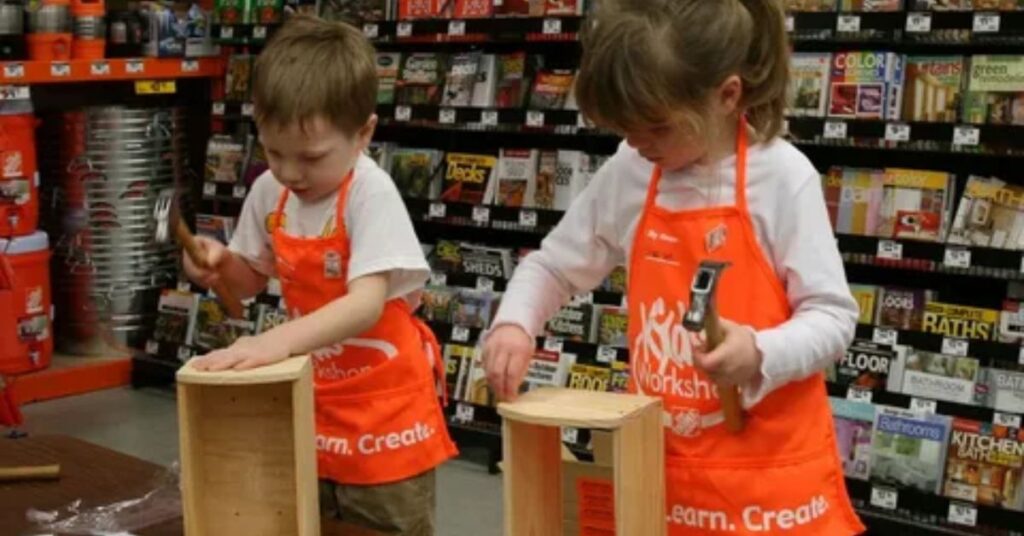
Parents ask me the same three questions before their first Home Depot Kids Workshop visit. How old does my kid need to be? What time should we actually show up? And what am I supposed to bring versus what’s provided? After attending more than a dozen of these with my own kids, here’s the honest, practical breakdown.
What Age Is the Home Depot Kids Workshop Really Designed For?
Home Depot officially recommends the workshops for children ages 5 to 12, and that range holds up well in practice. A five year old can usually manage the hammering and painting steps with guidance, while an eleven or twelve year old can often complete the entire project independently.
Younger Kids (Ages 3 to 4)
Several regional store listings note that younger children are welcome, and I’ve seen plenty of three and four year olds at the table. Realistically, this age group needs a parent doing most of the hands-on work, with the child painting, adding stickers, or hammering one or two nails under close supervision. It still works as an outing, just expect to do more of the building yourself.
The Sweet Spot (Ages 5 to 9)
This is where the workshop shines. Kids in this range can follow the step by step instructions with light supervision, handle the included tools safely, and take genuine pride in finishing something mostly on their own. Most projects are scaled specifically with this age group in mind.
Older Kids (Ages 10 to 12 and Up)
Older children can typically complete the build without much help at all, which sometimes means they finish in under fifteen minutes and are ready to move on. There’s no upper age cutoff enforced at the door, and I’ve seen older siblings tag along and build one anyway simply because they enjoy it.
What Time Should You Actually Show Up
The official window is 9:00 a.m. to 12:00 p.m. local time on the first Saturday of most months, but the time you arrive within that window matters more than people expect.
The Best Arrival Window
Getting there between 8:45 and 9:15 a.m. gives you the best odds of a shorter wait and full kit availability, especially for holiday themed months that tend to draw bigger crowds. I’ve shown up at 9:05 to a line already forming, and I’ve also shown up at 10:45 to an empty table with plenty of supplies left. It genuinely varies store to store and month to month.
Mid Morning Arrivals
If your Saturday morning is packed with other plans, arriving between 10:00 and 11:00 usually still works for quieter months like early spring projects. Holiday builds are the exception, since those can run out of kits before 10 a.m. in busier locations.
Cutting It Close to Noon
I don’t recommend arriving after 11:30. Even with registration, kits are handed out on a first come basis at most stores, and staff often start breaking down the table setup before the official noon cutoff if supplies run low.
If you want a clearer sense of exactly how registration timing interacts with arrival time, the step by step registration guide covers the full sign up window in detail, which pairs well with the arrival strategy above.
What to Bring (and What Home Depot Already Provides)
This is the part that trips up first time attendees the most. Home Depot supplies more than people assume, but a few small items make the morning noticeably smoother.
What’s Already Provided
- Pre cut wood pieces for the project
- Hardware like nails, screws, or wheel axles depending on the build
- Paint and paintbrushes
- Stickers for decorating
- The orange Kids Workshop apron (for first time attendees)
- An achievement pin and printed certificate
What You Should Bring Yourself
- Wipes or hand sanitizer. Paint gets on hands more than expected, and not every store has cleanup supplies readily available.
- A water bottle, especially if you’re arriving early and waiting in line outdoors during warmer months.
- The apron from a previous visit, if you have one. Returning families should bring it so staff can attach the new pin rather than issuing a fresh apron.
- Old clothes or a smock for younger kids who tend to get paint on sleeves more than older ones.
- A stroller or wagon, if you’re managing multiple young children, since the workshop table area can get crowded during peak arrival times.
Clothing Considerations
Closed toe shoes are a smart call given the tools involved, even though supervision keeps things safe. I’ve also learned to skip anything with long, loose sleeves for younger builders, since it tends to drag through wet paint.
Managing Multiple Kids at Once
If you’re bringing more than one child, staggering their start slightly can help, especially if there’s an age gap. Let the older child begin the trickier steps first while you help the younger one with the basics, then circle back. Most Workshop Captains are used to this and will happily help a second child if a parent’s hands are full with the first.
Safety Notes Worth Knowing
The tools provided are real but scaled appropriately, small hammers, child sized screwdrivers, and standard craft paintbrushes. Staff generally supervise the group as a whole, but I stay close for any step involving a nail or sharp edge, particularly with kids under seven. For a broader rundown of hands-on safety tips from people who build alongside their kids regularly, the Family Handyman guide to Home Depot Kids Workshop tips covers practical tool handling advice worth reading before your first visit.
Frequently Asked Questions
Is there a strict minimum age requirement?
No official cutoff exists, though the projects are designed with ages 5 to 12 in mind. Younger children can attend with heavier parent involvement.
Do I need to bring my own tools?
No. Every tool needed for the build is provided at the table.
What if we arrive after the kits run out?
Ask the customer service desk. Some stores hold a small reserve for exactly this situation, though it’s not guaranteed.
Can kids skip the workshop age range and still participate?
Yes. There’s no enforced upper limit, and younger toddlers can attend with significant help, though the experience is smoothest within the recommended range.
Should we bring our own paint smock?
It’s not required, but it saves a load of laundry, especially for younger kids who lean into the painting step with real enthusiasm.
Final Thoughts
Knowing the right age range, the smartest arrival window, and the small handful of items worth bringing turns a Home Depot Kids Workshop visit from a slightly chaotic guess into a smooth, predictable Saturday morning. None of it requires much preparation, just a little bit of knowing what to expect before you walk in.


Pingback: Home Depot Kids Workshop: What Kids Build Every Month (Full Breakdown)