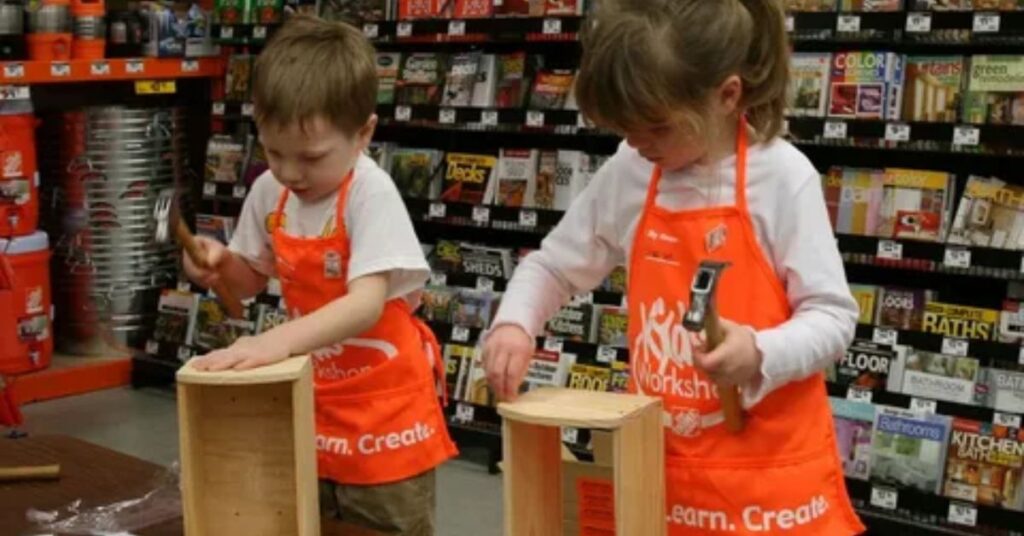
Few free family activities have the staying power of the Home Depot Kids Workshop. Held monthly at stores nationwide, these hands-on building sessions have quietly become a go-to weekend activity for parents looking for something genuinely engaging, and genuinely free, to do with their kids.
This guide covers exactly when the workshops happen, how registration actually works, what kids build each month, and a few practical tips that make the experience smoother for first-time attendees.
What the Home Depot Kids Workshop Actually Is
At its core, this is a hands-on learning experience designed around skill-building and creativity, where kids assemble a small wooden project using real tools under adult supervision.
Who the Workshops Are Designed For
The program is generally geared toward children ages 5 to 12, though in practice, all ages are welcome, and younger children can participate with extra help from a parent. Kids work with actual hand tools, including hammers and screwdrivers, and complete tasks like following step-by-step instructions and painting their finished project.
What Each Child Receives
Every participant walks away with more than just the finished craft. Kids typically receive a completed wooden project, a Kids Workshop apron, an achievement pin, and a certificate of completion at the end of each session.
When the Workshops Are Held
Consistency is one of the program’s strongest features, which makes planning around it fairly simple.
The Standard Monthly Schedule
Workshops are held on the first Saturday of each month, generally from 9 a.m. to 12 p.m. local time, though some locations post extended windows in their local calendars. This first-Saturday pattern holds steady across most of the year, aside from occasional adjustments around major holidays.
The 2026 Project Calendar
Each month features a different themed build. For 2026, confirmed projects include a Tow Truck in January, a Penguin Mailbox in February, a Leprechaun Trap in March, a Farm Planter in April, a Keepsake Box in May, a Goalie Game in June, and a Go Kart for the July 4 session. Later in the year, kids can expect a Rocket Game in August, a School Bus Organizer in September, a Witch Candy Box in October, a Dump Truck in early November, a Christmas Car Ornament later in November, and a Holiday Train in December.
Themes generally track whatever’s relevant to that month, whether that’s a seasonal holiday or a simple, kid-friendly build.
How Registration Actually Works
This is where a lot of first-time parents get confused, since the process has changed slightly over the years and can vary by location.
Pre-Registering Online
Registering ahead of time through the Home Depot website is strongly recommended, and registration for each month’s workshop typically opens right after the previous month’s event concludes. Signing up in advance is meant to help guarantee a spot, particularly at busier store locations.
What Happens If You Don’t Pre-Register
Here’s the important detail many parents miss: kits are generally distributed on a first-come, first-served basis regardless of registration status. Pre-registering does not guarantee a kit will be available once you arrive, especially at popular locations where supplies can run out before the session ends.
Time Slots and Group Size
Some locations offer registration for specific hour-long time slots within the 9 a.m. to 12 p.m. window, and families can often reserve spots for multiple children, though the exact limit depends on individual store inventory and staffing.
For families juggling multiple weekend activities, the National Recreation and Park Association’s guide to family-friendly community events offers useful context on how to build a broader calendar of free local activities around a single anchor event like this one.
Practical Tips for a Smoother Visit
A handful of small details make a noticeable difference in how the experience goes.
- Arrive early, even with registration. Kits go quickly, and arriving closer to the 9 a.m. start time significantly improves the odds of getting one, even for registered families.
- Dress for a mess. Painting is part of most projects, so clothes that can handle some paint exposure save a lot of post-workshop cleanup.
- Call ahead to confirm your local store is participating. While most locations run the program consistently, occasional scheduling gaps happen, and a quick phone call avoids a wasted trip.
- Bring a parent or guardian who can actively help. Younger children in particular need hands-on assistance with hammering and assembly steps.
Why These Workshops Have Stayed Popular for Years
The program has been running for close to two decades, and its staying power comes down to a few consistent factors that have held up over time.
Zero Cost, Real Value
Unlike many “free” retail events that quietly upsell products, this program provides genuinely complete materials and tools at no cost, with no purchase required to participate.
A Built-In Learning Component
Beyond the craft itself, workshops are often paired with an extension activity tied to STEAM learning, allowing kids to continue engaging with the project’s underlying concept once they’re back home, whether that’s basic mechanics, geometry, or simple engineering principles depending on the month’s build.
A Reliable Monthly Routine
For many families, the predictable first-Saturday schedule has become something to plan around rather than something to stumble into. That consistency, more than any single project, is likely what’s kept the program relevant for so long.
Comparing Home Depot’s Program to Similar Options
Home Depot isn’t the only retailer running a kids’ building program, and knowing how it stacks up against alternatives can help families choose which one fits their schedule best.
Lowe’s runs a comparable monthly program with its own registration system and themed builds, generally aimed at a slightly younger age range. JCPenney also offers free monthly kids’ craft events, though these tend to focus more on art-based projects rather than tool-based building.
Families near multiple participating retailers sometimes rotate between programs month to month, effectively doubling their access to free, hands-on activities without needing to travel far or pay anything out of pocket.
Final Thoughts
The Home Depot Kids Workshop remains one of the more consistently well-run free activities available to families, largely because the program hasn’t changed its core formula in years: a themed, hands-on build, real tools, and a predictable first-Saturday schedule that’s easy to plan around.
For the smoothest experience, registering online in advance, arriving early regardless of registration status, and confirming your specific store’s participation ahead of time will meaningfully improve the odds of a smooth, kit-in-hand visit. With a full 2026 project calendar already confirmed, families now have a clear roadmap for the rest of the year’s builds, making it easier than ever to turn this into a regular part of the monthly routine.


Pingback: Home Depot Return Policy 2026: Full Refund Guide
Pingback: Home Depot Kids Workshop Explained: Free Hands-On Learning For Children