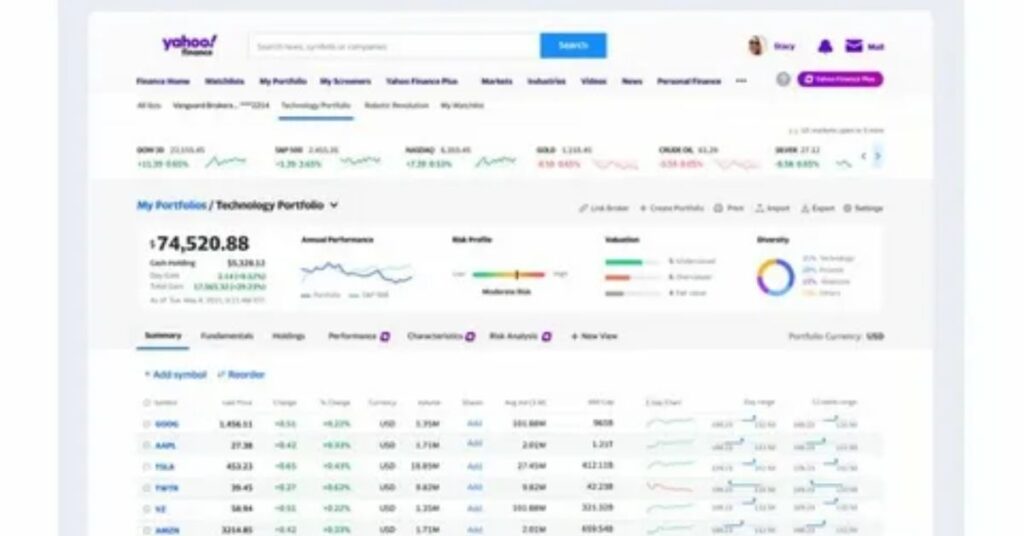
Why Meta Is a Good Starting Point for Tracking Tech Stocks
Most tech stock trackers start with one company and expand outward. Meta Yahoo Finance searches are often the entry point for exactly this reason. Meta sits at the intersection of advertising, social media, and AI spending, which makes it a useful benchmark for the broader tech sector.
Rather than treating Meta as an isolated stock to watch, this guide shows how to use it as the anchor for a full tech tracking system on Yahoo Finance. That system can then expand to cover other companies you care about, without starting from scratch each time.
This approach saves time and gives you a repeatable process instead of randomly checking prices whenever you remember to.
Setting Up Your Tech Stock Tracking Base
Before tracking multiple companies, it helps to build one solid tracking habit around a single stock. Meta works well for this because it reports frequently discussed earnings and has clear, well documented financials.
Step One: Create a Free Yahoo Finance Account
A free account unlocks watchlists, price alerts, and portfolio tracking features that aren’t available to anonymous visitors. This takes less than two minutes to set up.
Step Two: Add Meta to Your Watchlist
Search for META, open its quote page, and click the watchlist icon. This adds the stock to your personalized dashboard, which you’ll see immediately upon logging in going forward.
Step Three: Set Price and Percentage Alerts
Configure alerts for specific price thresholds or percentage moves that matter to your strategy. This removes the need to check the stock manually throughout the day.
Building Out a Full Tech Sector Watchlist
Once Meta is set up, expanding to a broader tech watchlist follows the same process. The goal is to track companies that move for related but distinct reasons.
A useful starting list often includes:
- Meta (META), representing social media and digital advertising
- Alphabet (GOOGL), representing search and cloud computing
- Microsoft (MSFT), representing enterprise software and AI infrastructure
- Apple (AAPL), representing consumer hardware and services
- Amazon (AMZN), representing e-commerce and cloud computing
Adding each of these takes the same three steps used for Meta. The value comes from seeing them together on one dashboard rather than checking five separate tabs.
[Suggested internal link: to a page about building a diversified stock portfolio]
Using the Comparison Chart Tool
Yahoo Finance lets you overlay multiple stocks on a single chart, which is one of the more underused features on the platform. This shows relative performance rather than raw price, which matters since stocks trade at very different price points.
To use it, open Meta’s chart, then use the compare function to add other tickers from your watchlist. Adjust the timeframe to match what you’re trying to learn, whether that’s a one week snapshot or a five year trend.
This method quickly reveals whether a stock’s move is company specific or part of a broader sector trend. A 4% Meta drop alongside similar drops across your entire watchlist points to sector wide pressure, not company specific news.
Tracking Earnings Across Multiple Tech Stocks
Earnings season creates the most stock movement in any given quarter, so tracking report dates across your whole list matters.
Using the Earnings Calendar
Yahoo Finance’s earnings calendar lists upcoming report dates for every stock on your watchlist. Checking this weekly during earnings season helps you avoid being caught off guard by a report you forgot was coming.
Comparing EPS Estimates to Actual Results
After each earnings report, compare the actual EPS figure against the analyst estimate. A consistent pattern of beats or misses across a stock’s recent history can reveal something about how conservative or aggressive analyst expectations tend to be for that company.
Reading News Sentiment Across Your Watchlist
The news aggregation feature pulls headlines from multiple outlets for each stock. Scanning this daily, even briefly, helps connect price movement to the story behind it.
For deeper research into any single headline, cross referencing with a primary source strengthens your understanding of the actual event, rather than relying solely on a summarized headline. The U.S. Securities and Exchange Commission’s EDGAR database, for instance, provides direct access to the actual quarterly and annual filings companies submit, which is useful when a headline references a specific financial disclosure.
Common Mistakes When Tracking Multiple Tech Stocks
A few habits tend to undermine an otherwise solid tracking system.
Checking too frequently is one. Reviewing your watchlist every few minutes creates noise and can lead to reactive decisions based on short term price swings rather than real developments.
Ignoring correlation is another. If every stock on your watchlist tends to move together, you’re not actually tracking diversified exposure, just one large tech bet spread across several tickers.
Skipping the fundamentals in favor of price alone also causes problems. A stock’s price tells you what the market thinks right now, not whether the underlying business is actually improving.
Turning Your Watchlist Into a Research Routine
A tracking system only works if it becomes a habit rather than a one time setup. Building this into a simple weekly routine keeps it manageable.
Daily: Quick glance at price alerts and major news headlines.
Weekly: Review the earnings calendar for upcoming reports across your watchlist.
Quarterly: Deep dive into financial statements for each holding after earnings are released.
This structure keeps the process light enough to sustain long term, which matters more than an intensive system you abandon after a month.
How This Applies Beyond Meta
Once this system is built around Meta Yahoo Finance tracking, the same steps apply to any sector you want to follow closely. Swap in different tickers relevant to healthcare, energy, or consumer goods, and the underlying process stays identical.
The real skill being built here isn’t specific to any one stock. It’s a repeatable research habit that scales as your interests or portfolio grow.
FAQs
How do I track multiple tech stocks on Yahoo Finance at once?
Create a free Yahoo Finance account, then add each stock ticker to your watchlist individually. The dashboard displays all of them together, making it easy to scan prices and news in one place.
Can I compare Meta’s stock chart to other tech companies?
Yes, Yahoo Finance’s compare feature lets you overlay multiple stock tickers on the same chart. This shows relative performance over a chosen timeframe rather than raw price movement alone.
How often should I check my tech stock watchlist?
Checking daily for major alerts and weekly for earnings dates is generally sufficient for most long term investors. Checking too frequently can lead to reactive decisions based on short term noise rather than meaningful developments.
Does Yahoo Finance send notifications for price changes?
Yes, once you set up price or percentage alerts on a stock, Yahoo Finance can notify you when those thresholds are crossed. This removes the need to manually monitor prices throughout the day.
What’s the best way to track tech earnings season on Yahoo Finance?
Use the earnings calendar feature to see all upcoming report dates across your watchlist at once. Reviewing this weekly during earnings season helps you prepare for potential volatility around specific report dates.
Is it better to track individual tech stocks or a tech sector ETF?
Both approaches have merit depending on your goals. Individual stocks allow more targeted research and control, while a sector ETF offers built in diversification with less individual company analysis required.
Can I export my Yahoo Finance watchlist data?
Yes, Yahoo Finance allows users to export historical price data and portfolio information as spreadsheet files. This is useful for deeper analysis outside the platform itself.
Final Verdict
Using Meta Yahoo Finance tracking as the foundation for a broader tech stock system works well because it forces a repeatable process rather than random, reactive checking. Starting with one stock, building solid habits around alerts and earnings dates, and then expanding to a full watchlist creates a research routine that actually holds up over time.
The platform itself isn’t the hard part. Most of the value comes from consistency, checking the right things at the right intervals instead of obsessing over daily price swings.
Once this system is in place around Meta, expanding it to cover any other sector or company takes minutes, not hours, making it a genuinely reusable framework for tracking tech stocks long term.
This article is for informational purposes only and does not constitute financial advice. Always do your own research or consult a licensed financial advisor before making investment decisions.


Pingback: 5 Meta Yahoo Finance Metrics Every Investor Must Know