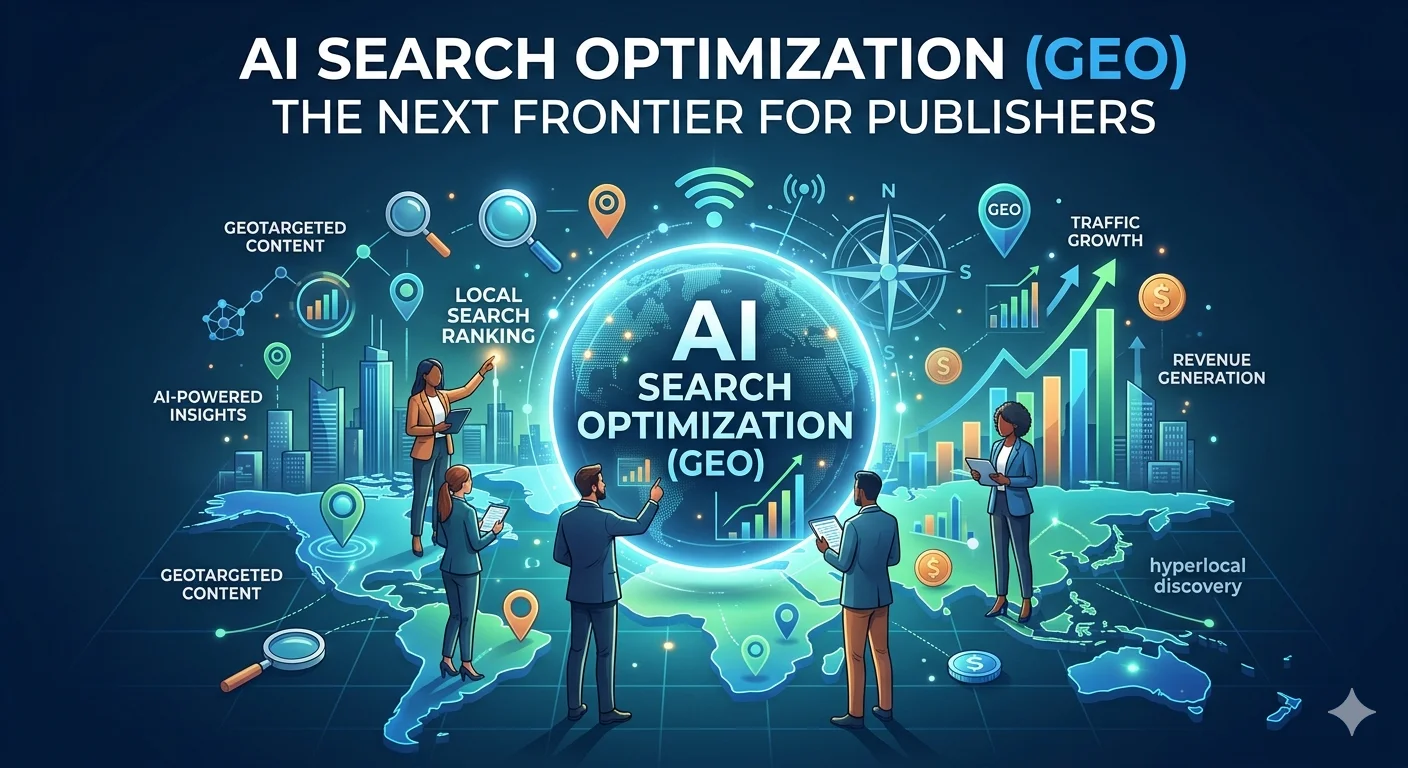

Search is undergoing one of its most significant transformations since the rise of mobile-first indexing. Artificial intelligence is no longer just ranking web pages—it is interpreting intent, summarizing answers, and generating responses directly within search interfaces. For publishers, this shift introduces both disruption and opportunity.
AI Search Optimization, often referred to as Generative Engine Optimization (GEO), represents a new discipline focused on making content discoverable, understandable, and usable by AI-driven search systems. Unlike traditional SEO, which emphasizes keywords and backlinks, GEO prioritizes context, authority, structure, and semantic clarity. As AI-powered search experiences become mainstream, publishers must adapt their strategies to remain visible and relevant. Understanding GEO is now essential for sustaining traffic, credibility, and monetization in an evolving search ecosystem.
Why AI Search Optimization Is Becoming Critical
Traditional SEO strategies are no longer sufficient on their own as AI-driven search engines reshape how information is retrieved and presented. Instead of directing users to multiple links, AI systems increasingly generate direct answers by synthesizing content from trusted sources. For publishers, visibility now depends on whether AI models can interpret and trust their content.
Insights from AI Search Optimization strategies explained by Wheerly, available at Wheerly, show how publishers must optimize for machine comprehension as much as human readers. This shift makes structured data, topical authority, and clarity central to success. Publishers who adapt early stand to gain disproportionate exposure in AI-powered discovery environments.
Understanding GEO Versus Traditional SEO
AI Search Optimization differs fundamentally from traditional SEO. While classic SEO focuses on ranking pages in search results, GEO aims to ensure content is selected, summarized, and referenced by AI systems. Keywords still matter, but context, entity relationships, and intent alignment matter more.
AI models evaluate how well content answers questions, explains concepts, and demonstrates expertise. This means shallow or repetitive content is less likely to surface. GEO rewards depth, originality, and coherence. Publishers must think beyond page rankings and instead optimize for inclusion in AI-generated responses and conversational search results.
How AI Search Engines Evaluate Content
AI-driven search engines analyze content holistically rather than relying solely on metadata or backlinks. They assess topical coverage, semantic richness, and factual consistency across multiple sources. Well-structured articles with clear headings, concise explanations, and supporting evidence are more likely to be trusted.
AI models also favor content that reflects real expertise and aligns with user intent. This evaluation process places greater emphasis on editorial quality and less on technical manipulation. Publishers who invest in authoritative, well-organized content gain a competitive edge in AI-powered search environments.
The Role of Content Structure and Clarity
Structure plays a vital role in GEO. Clear headings, logical flow, and well-defined sections help AI systems understand and extract relevant information. Content that answers specific questions within dedicated sections is easier for AI to reference.
Bullet points, summaries, and FAQs further improve machine readability. Clarity also reduces ambiguity, ensuring AI models interpret content accurately. Publishers should aim to present information in a way that is both human-friendly and machine-friendly, balancing depth with accessibility to maximize discoverability.
Authority, Trust, and Source Credibility
AI search systems prioritize trusted sources when generating answers. Authority is built through consistent publication of accurate, in-depth content within a specific niche.
Signals such as brand recognition, expert authorship, and content consistency influence whether AI systems consider a publisher reliable. Unlike traditional SEO, where backlinks dominate, GEO places more weight on content quality and trustworthiness. Publishers that establish themselves as definitive sources on key topics are more likely to be referenced by AI-generated responses, increasing visibility without direct clicks.
Optimizing for Conversational and Intent-Based Search
AI-powered search is inherently conversational. Users ask complex, natural-language questions rather than typing fragmented keywords.
GEO requires publishers to anticipate these queries and structure content accordingly. Answering “how,” “why,” and “what” questions clearly improves alignment with conversational search. Content should reflect real user intent, offering explanations rather than just definitions. By aligning articles with the way people speak and think, publishers increase the likelihood that AI systems will surface their content as authoritative answers.
The Impact of AI Search on Publisher Traffic
One of the biggest concerns for publishers is reduced click-through rates as AI provides answers directly in search results. While this shift may decrease raw traffic, it increases the importance of brand visibility and authority.
Being cited or referenced by AI systems can enhance credibility and influence audience trust. Publishers must adjust KPIs, focusing on brand exposure, content attribution, and downstream engagement rather than clicks alone. GEO helps publishers remain relevant even as traditional traffic patterns evolve.
Content Depth and Original Insights Matter More Than Ever
AI systems are designed to filter out low-value or repetitive content. Articles that merely rephrase existing information are less likely to be surfaced. GEO rewards original research, unique perspectives, and actionable insights.
Publishers should focus on adding value rather than volume. Deep analysis, expert commentary, and proprietary data strengthen content’s appeal to AI models. This shift encourages higher editorial standards and positions quality publishers to benefit most from AI-driven search evolution.
Preparing for the Future of AI-Driven Discovery
AI Search Optimization is not a temporary trend—it represents a long-term shift in how information is accessed. Future search experiences will become more personalized, contextual, and predictive. Publishers who adapt their content strategies now will be better prepared for ongoing changes.
This includes investing in structured content, authoritative storytelling, and audience-focused publishing. GEO is ultimately about aligning content with how AI understands and delivers knowledge, ensuring publishers remain integral to the information ecosystem.
Frequently Asked Questions (FAQs)
1. What is AI Search Optimization (GEO)?
GEO focuses on optimizing content so it can be understood, trusted, and surfaced by AI-driven search and generative answer systems.
2. How is GEO different from traditional SEO?
Traditional SEO targets rankings and clicks, while GEO targets inclusion and citation within AI-generated answers.
3. Does GEO replace SEO?
No, GEO complements SEO. Publishers should combine both strategies for maximum visibility.
4. Will AI search reduce website traffic?
It may reduce some clicks, but it increases brand exposure and authority when content is referenced by AI systems.
5. How can publishers start optimizing for GEO?
By focusing on clear structure, authoritative content, user intent, and original insights.
Conclusion
AI Search Optimization (GEO) marks the next frontier for publishers navigating an AI-driven search landscape. As search engines evolve from link-based ranking systems to answer-generating platforms, publishers must rethink how they create and structure content.
GEO emphasizes clarity, authority, depth, and intent alignment over traditional keyword tactics. While challenges such as changing traffic patterns exist, the opportunities for increased credibility and long-term relevance are substantial. Publishers who embrace GEO today will be better positioned to thrive in a future where AI shapes how audiences discover and consume information.


Pingback: AI Search Optimization GEO Platforms Pricing Models
Pingback: How To Master AI Search Optimization In 2026
Pingback: AI Search Optimization Strategies That Actually Work